
Last updated September 20, 2026
Level 1 sweep and inspection to the NFPA 211 annual standard - flue, crown, cap, and flashing checked and photographed
Chimney sweep logs do not sweep chimneys. They loosen some creosote - which then falls where a brush and vacuum still have to collect it.
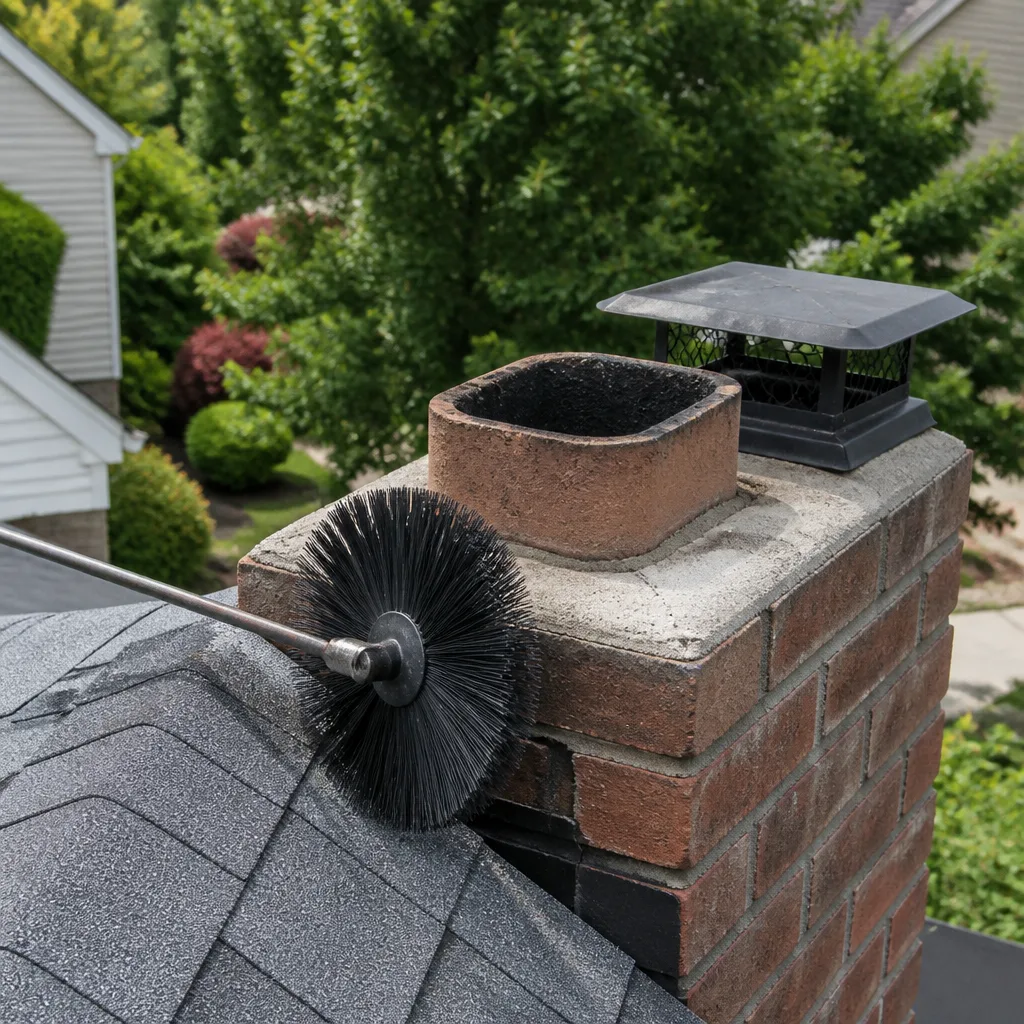
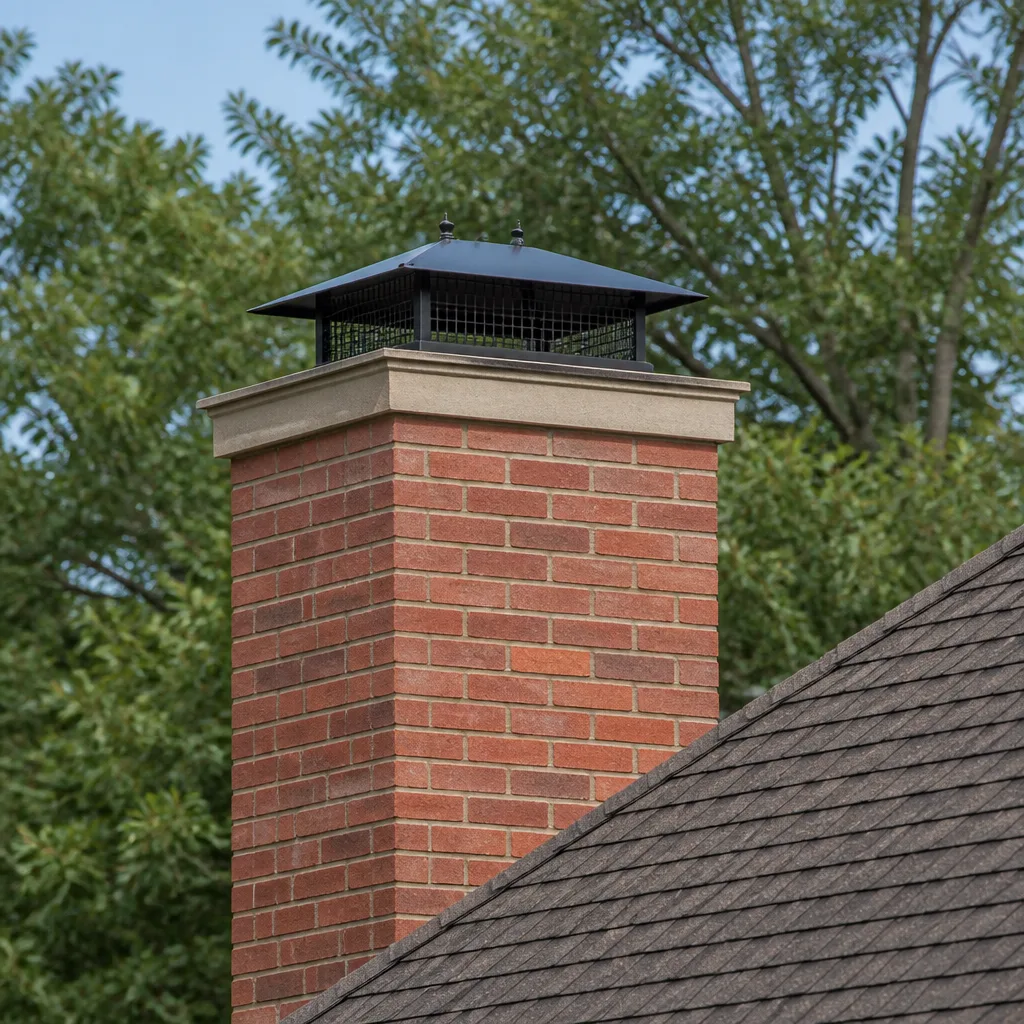
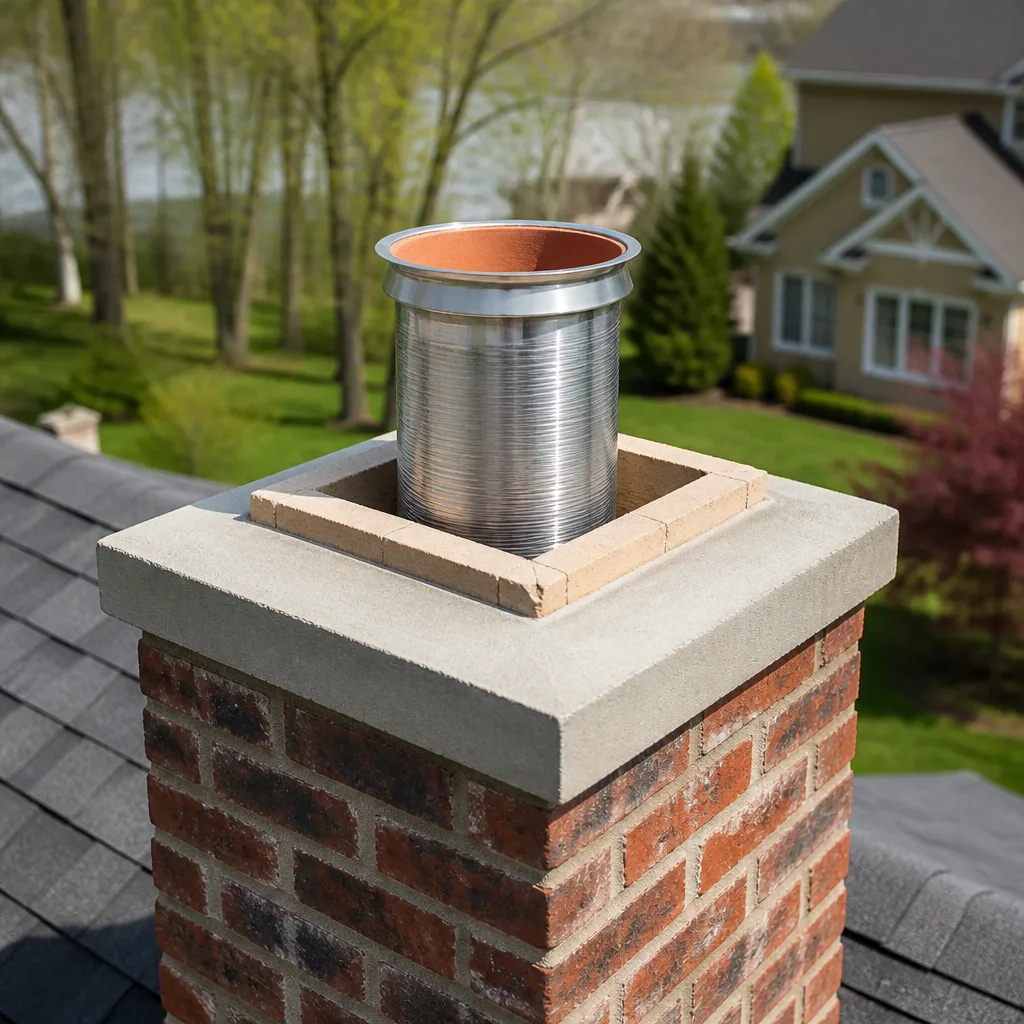
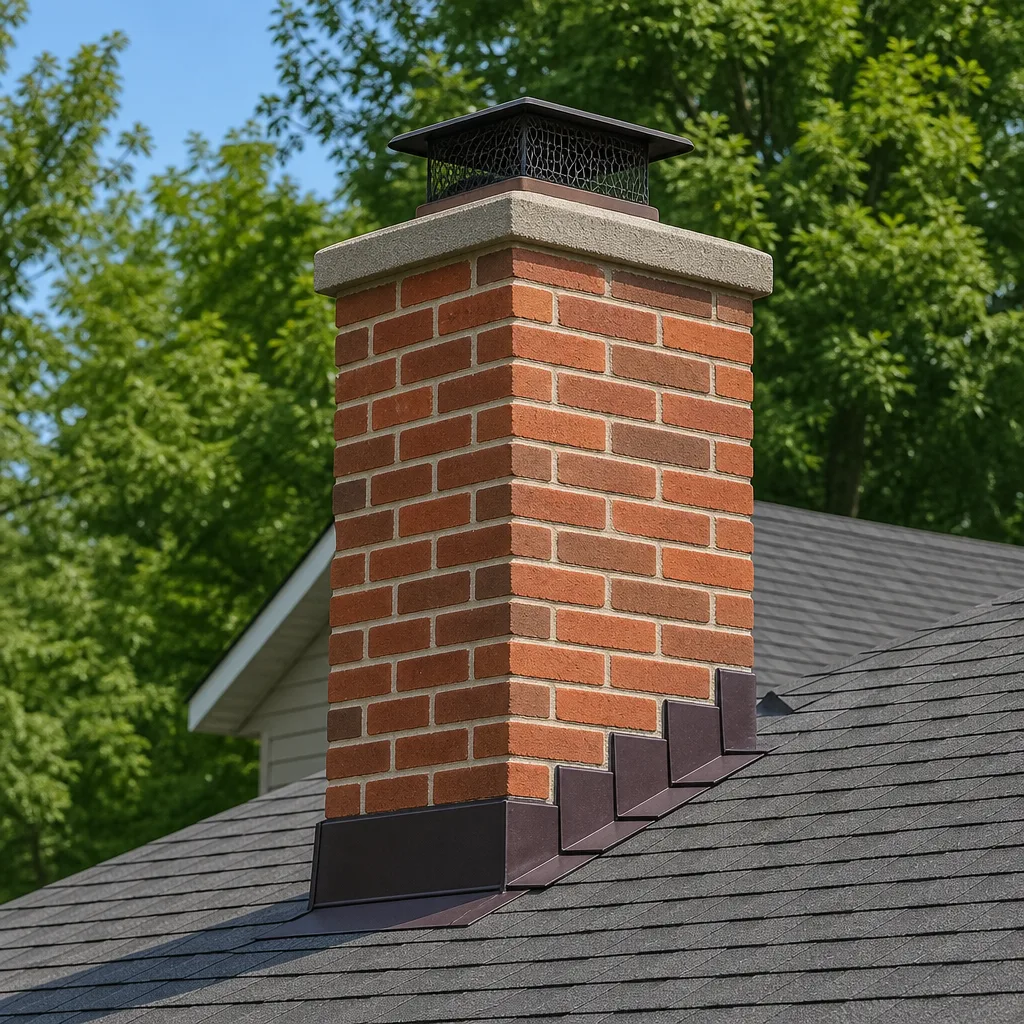
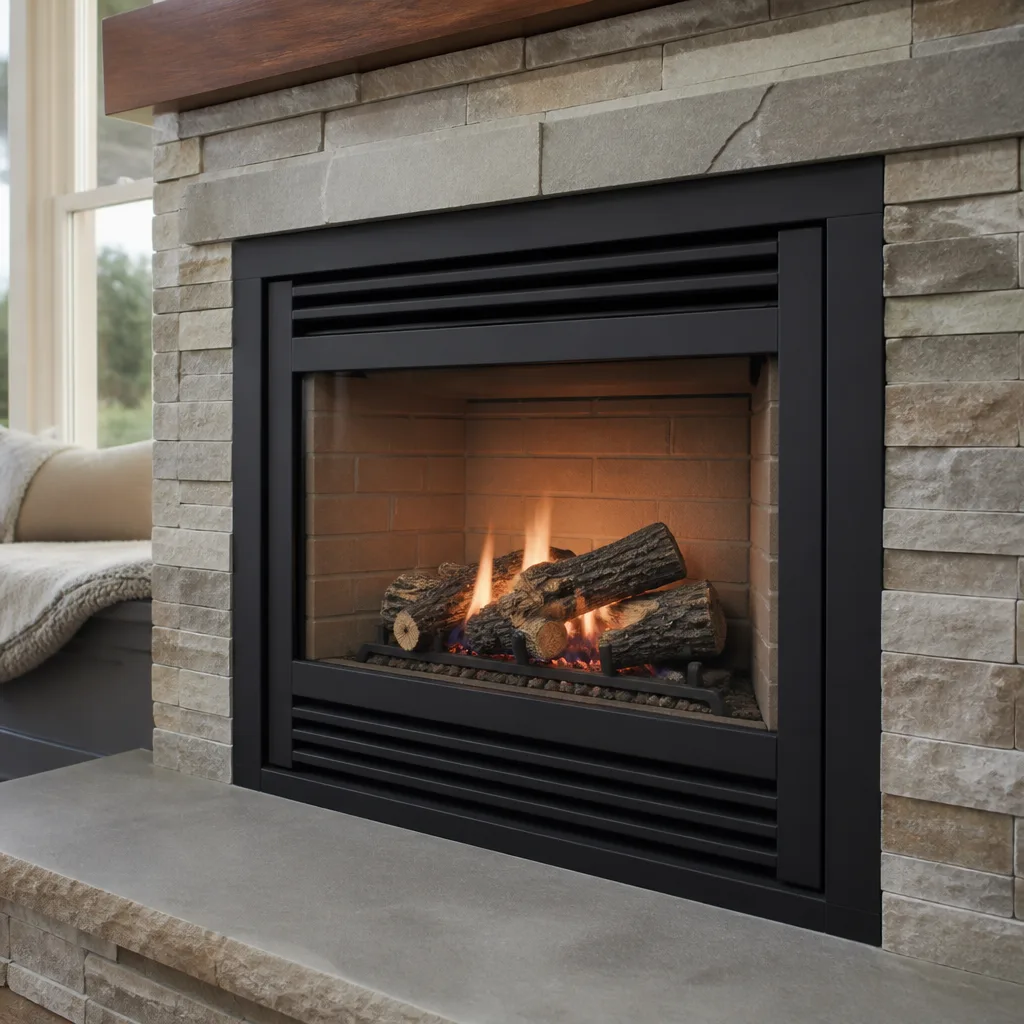
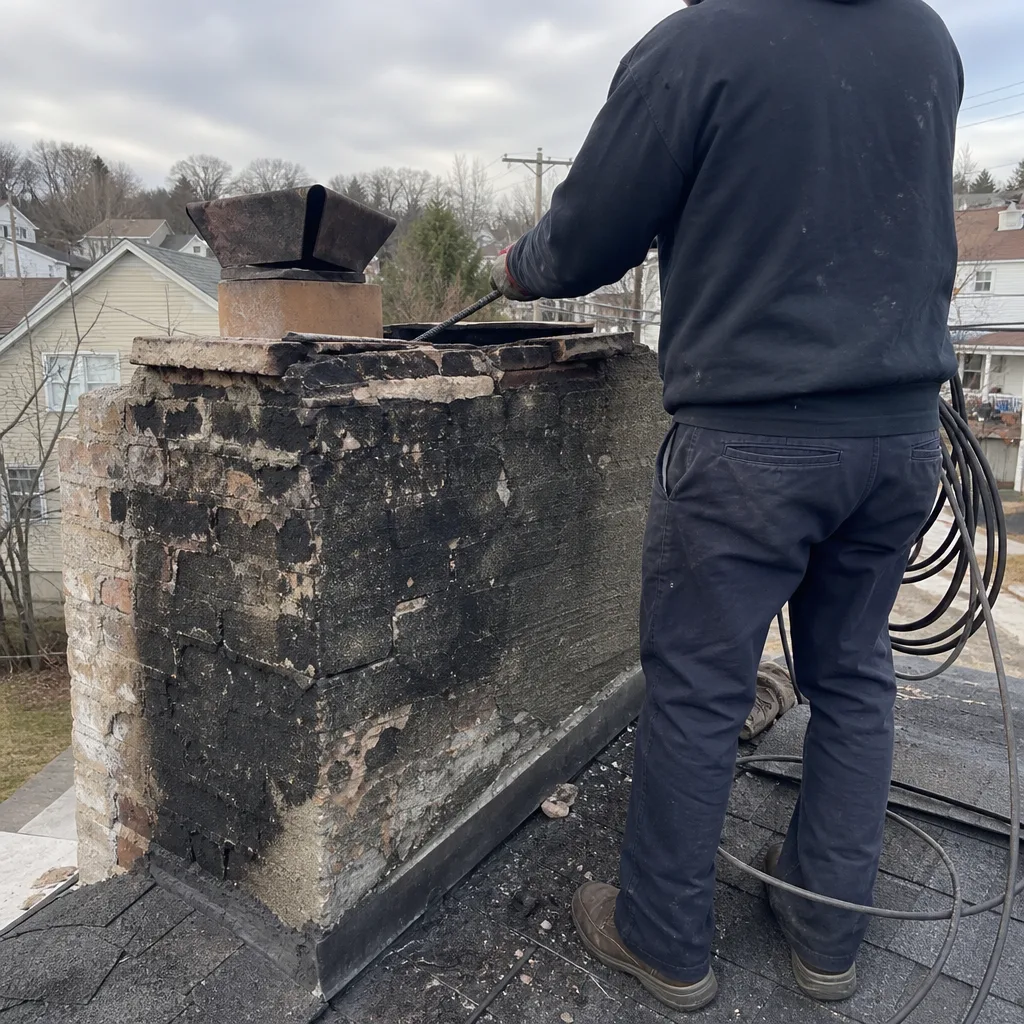 Before
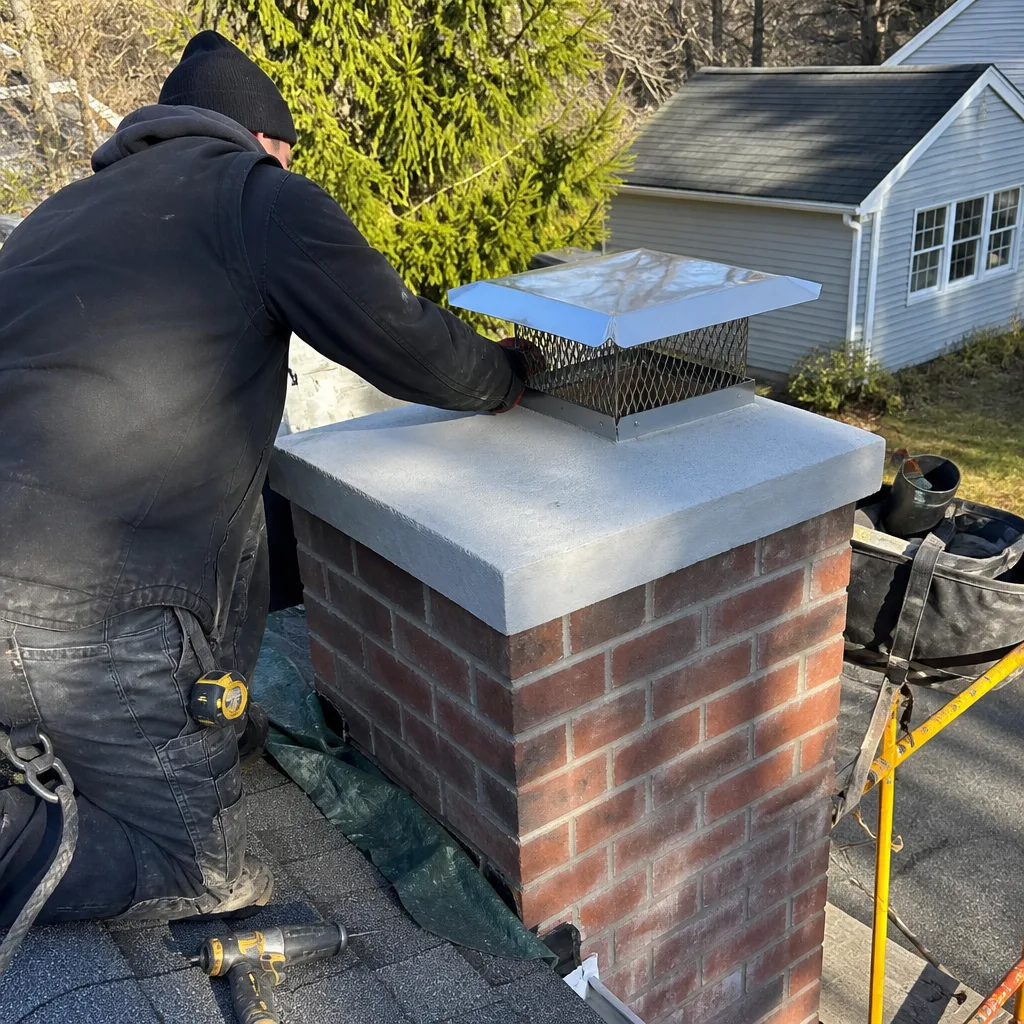 After
After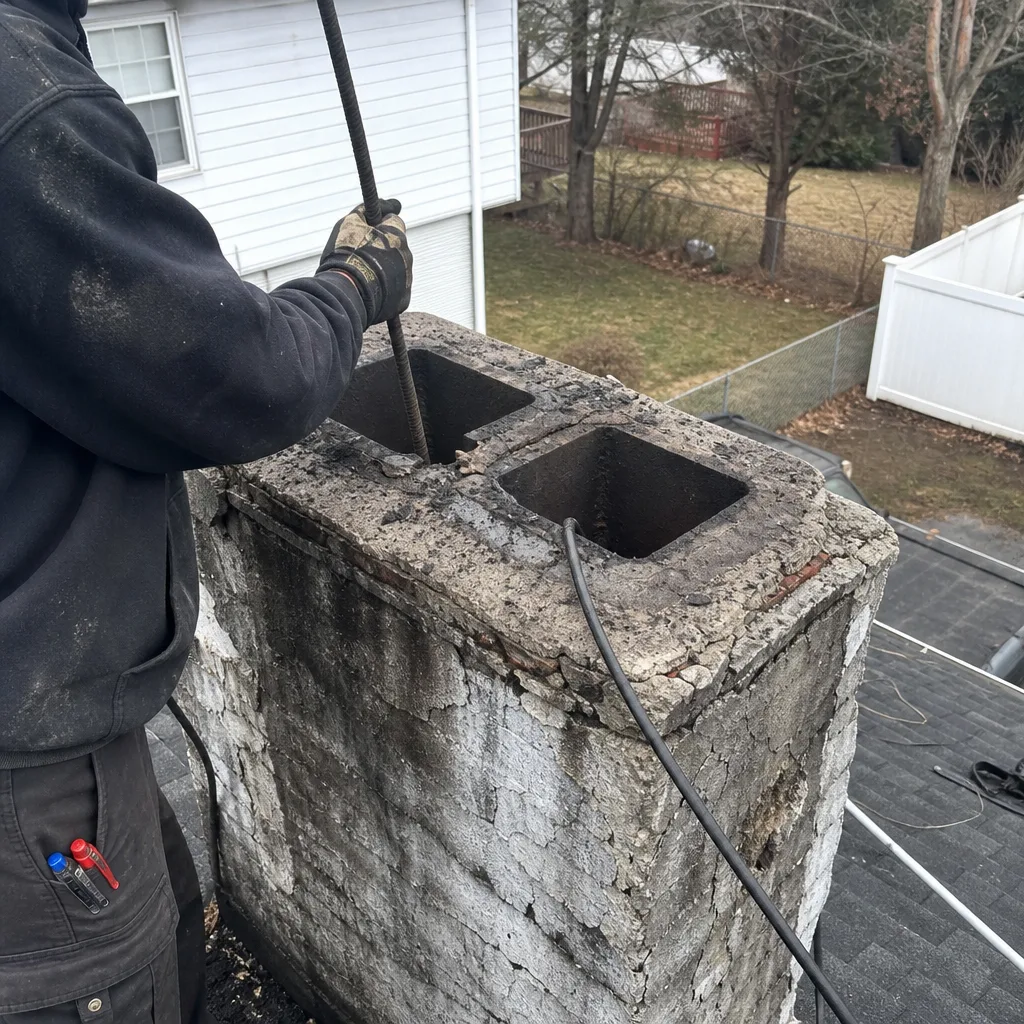 Before
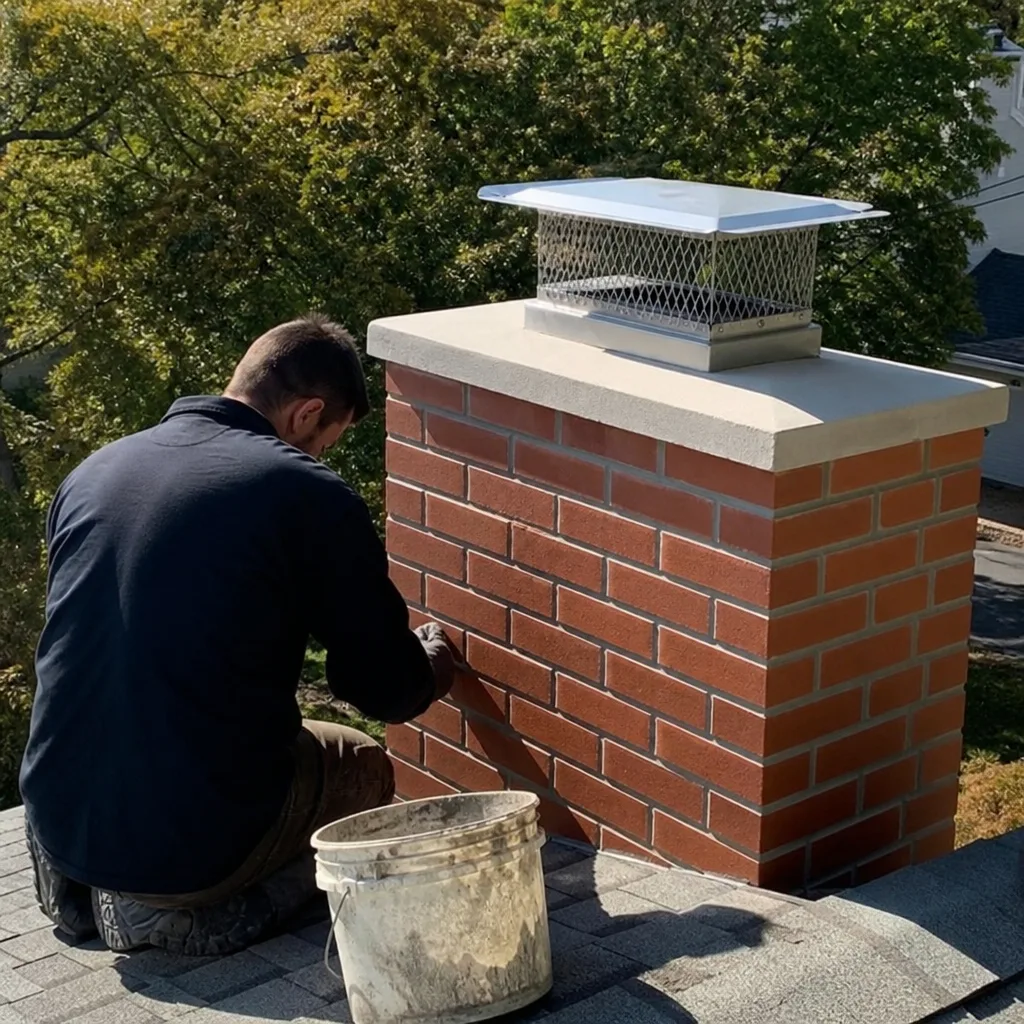 After
After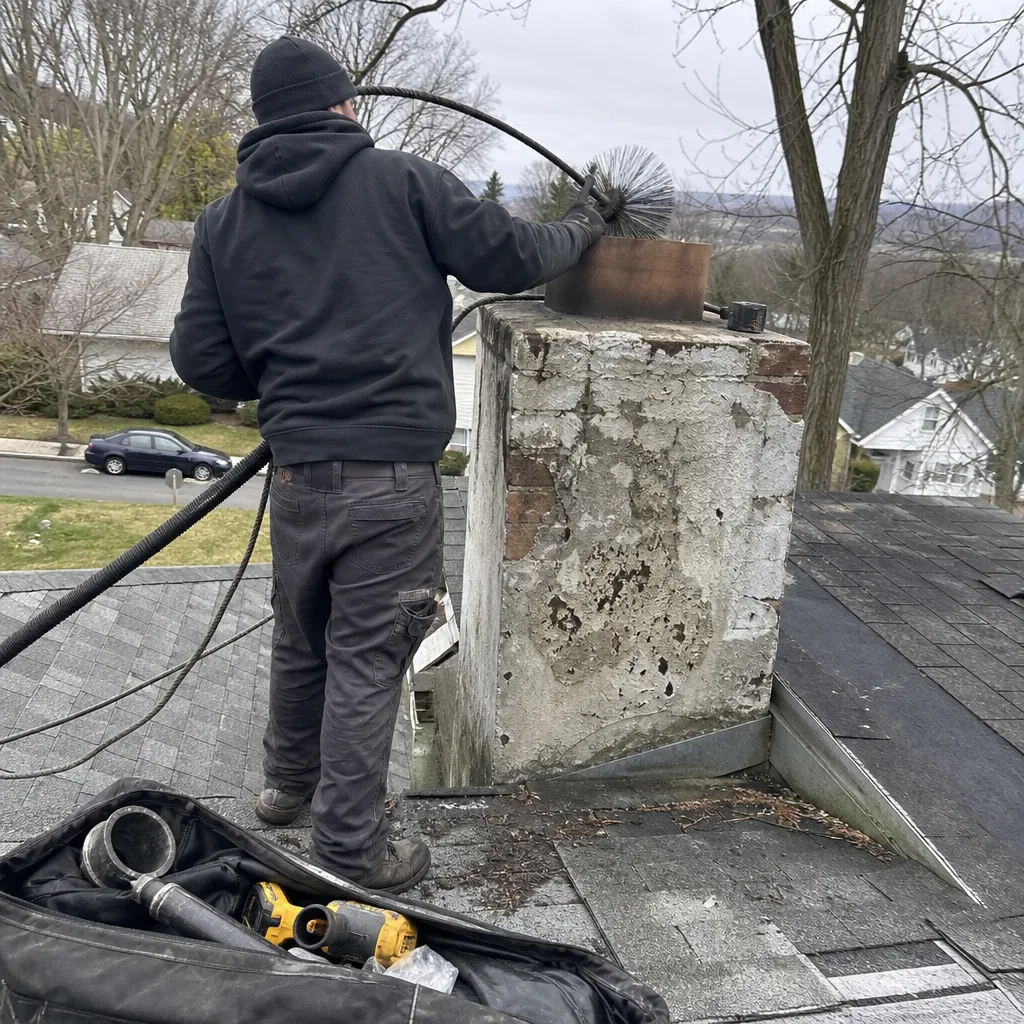 Before
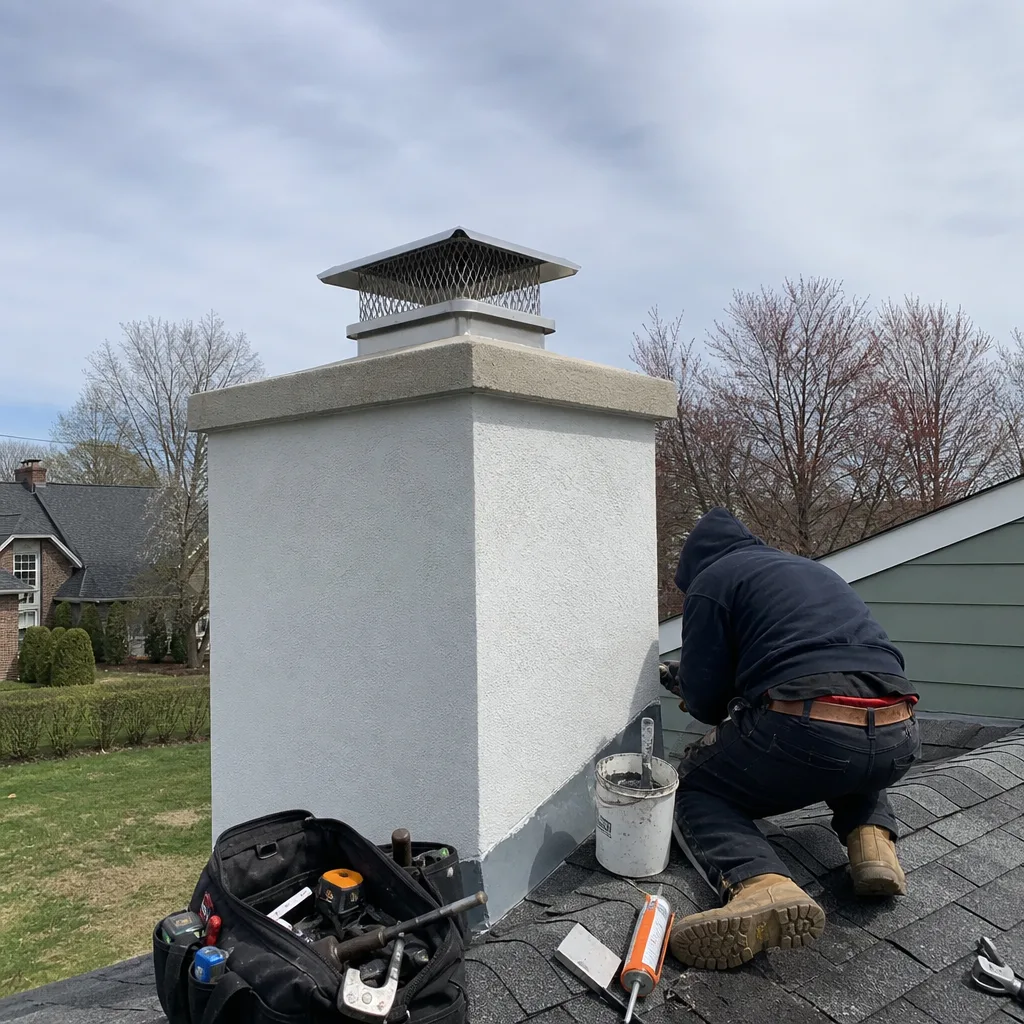 After
AfterChimney Cleaning Warning Signs: A Yonkers Homeowner’s Reference Guide
A fireplace smell described as “like a campfire, but in the house” is the most underreported precursor to a chimney fire in Yonkers homes. That odor means creosote is off-gassing at room temperature, which means the deposit inside your flue is deep enough to combust without a hot fire to ignite it. Most chimney warning signs don’t announce themselves dramatically. They arrive as faint odors in July, brown stains above the mantel, or a draft that used to pull cleanly and now pushes smoke back into the living room. This guide and our Complete Guide to Chimney Cleaning in Yonkers give each warning sign a cause, a severity rating, and a next action, so “I’ll keep an eye on it” stops being the default response for Yonkers homeowners.
Quick Answer
The most common chimney warning signs in Yonkers are a campfire smell when the fireplace isn’t in use, dark staining above the firebox opening, white efflorescence on the exterior brick face, rust streaks below the chimney cap, and smoke that rolls into the room instead of up the flue. Any one of these means the chimney needs a professional inspection, most need a sweep within the month, and a few mean you should stop using the fireplace until a Level 2 camera inspection confirms the flue is sound. See our DIY vs Professional Chimney Cleaning guide to decide whether to tackle it yourself.
Table of Contents
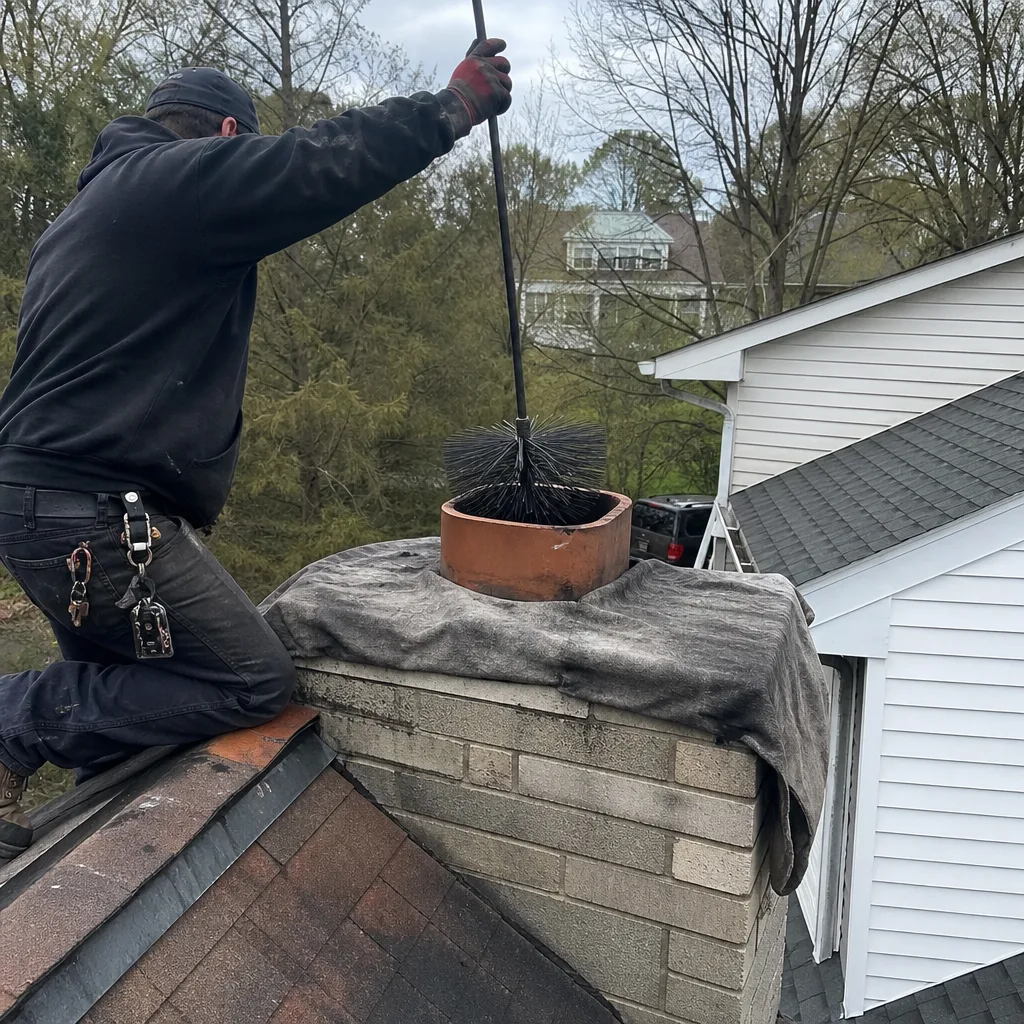
- The Odor-to-Cause Index: What That Smell Actually Means
- Visual Signs You Can Read From Ground Level or the Firebox
- Draft Irregularities Explained Mechanically
- The Severity Triage: Monitor, Schedule, or Stop Using Today
- Yonkers Rowhouses and Two-Family Homes: Shared Flue Warning Signs
- What a Level 2 Camera Inspection Finds That a Flashlight Misses
- Common Mistakes to Avoid
- When to Call a Professional
- Frequently Asked Questions
- The Bottom Line
BeforeAfterThe Odor-to-Cause Index: What That Smell Actually Means
Odor is the earliest warning system your chimney has, and it’s the one most Yonkers homeowners dismiss first. A smell only occurs when something is actively changing inside the flue, being exposed to moisture, or off-gassing. Here’s what each specific odor points to, and how seriously to take it.
Campfire smell in summer (or any time the fireplace is cold)
This is Stage 2 or Stage 3 creosote off-gassing at room temperature. Creosote is the condensed byproduct of wood combustion, and it builds up on the flue liner every time you burn. Stage 1 is a light dusting. Stage 2 is a flaky, granular deposit. Stage 3 is a glossy, tar-like glaze that bonds to the liner. When you smell campfire on a warm August afternoon in Yonkers, the deposit inside the flue is deep enough that its volatile compounds are evaporating without any heat source. That’s the chemical signature of a chimney fire waiting for an ignition source. Severity: schedule a sweep this month.
Sulfur or rotten-egg smell
This is backdrafting from a gas appliance, usually a gas water heater or boiler venting through the same chimney or a connected flue. The smell means combustion gases are spilling into the house instead of rising out. This is a carbon monoxide exposure risk. Severity: stop using the connected appliance and call a professional today.
Musty, wet, or animal odor
Moisture intrusion or animal debris. A missing or damaged chimney cap lets rain and snow into the flue, and wet creosote or a soaked masonry liner produces a distinct musty smell. Animal odor, especially with scratching sounds, usually means a squirrel, raccoon, or bird has nested in the flue or smoke chamber. Severity: schedule a sweep and cap inspection this month; skip using the fireplace until it’s clear.
Acrid, sharp, or chemical smell during or after a fire
Active smoldering inside the flue. If a fire produces a sharp, acrid smell that isn’t just wood smoke, there may be a creosote deposit actively burning or smoldering above the firebox. This is a chimney fire in its early stages. Severity: call the fire department if you see flames or hear a roar; otherwise, stop using the fireplace and call a sweep today.
Visual Signs You Can Read From Ground Level or the Firebox
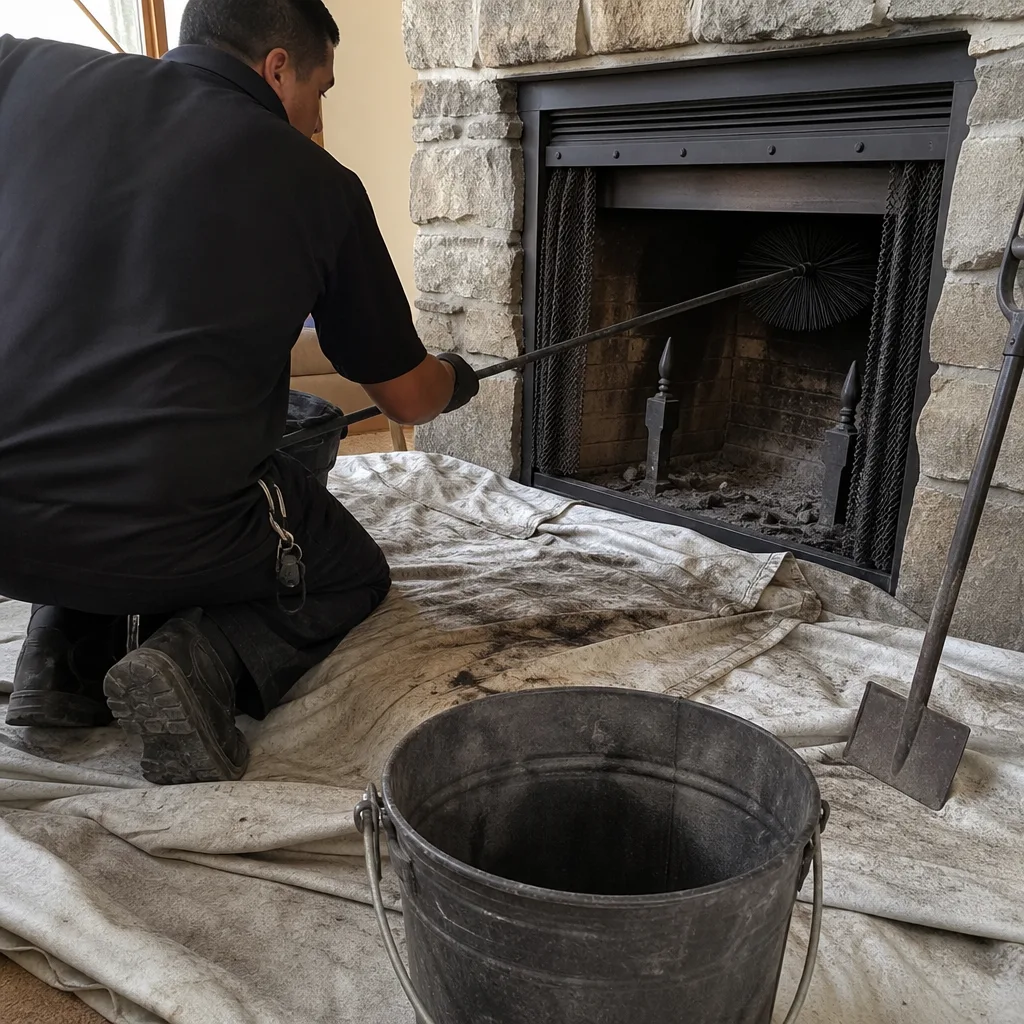
You don’t need a ladder or a camera to spot most significant chimney problems. In our experience across Yonkers, homeowners who know what to look at on the brick face catch repointing and liner issues years before homeowners who don’t.
White efflorescence on the brick face
Efflorescence is a white, powdery deposit that forms when water moves through masonry and evaporates, leaving mineral salts behind. It’s the visible signature of moisture cycling through the brick. In Yonkers, with freeze-thaw winters and humid summers, water that enters the brick expands when it freezes, and that repeated cycling causes spalling, which is when the brick face flakes off in layers. Efflorescence is not a cosmetic issue. It’s the first visible sign that water is moving through the chimney, and it means the crown, the cap, or the flashing has a leak. Severity: schedule an inspection this season.
Rust streaks below the chimney cap
Rust streaking on the exterior brick below the cap is a water entry marker at the crown. The crown is the concrete or mortar slab at the top of the chimney, and when it cracks, water runs through the crack, picks up rust from the cap’s metal components, and stains the brick below. What begins as a $600 crown repair becomes a $4,000+ flue liner replacement if the water reaches the clay tiles and the freeze-thaw cycle cracks them. Severity: schedule an inspection this month.
Dark staining above the firebox opening
This is smoke rollout from draft failure. When the flue can’t pull properly, smoke spills out of the firebox opening and deposits a dark, sooty residue on the surrounding face brick or mantel. The cause is usually one of three things: a liner obstruction (creosote, debris, animal nest), negative house pressure pulling air down the chimney, or an undersized or deteriorated flue. Severity: schedule a sweep and draft test before the next burn.
Crumbling mortar joints or missing bricks in the firebox
The firebox is the brick chamber where the fire burns. It’s not supposed to shed material. Crumbling mortar joints between firebox bricks, or brick faces that have spalled away, mean the firebox masonry has absorbed heat and moisture for years and is structurally degrading. A compromised firebox can allow heat to reach framing materials behind the brick. Severity: stop using the fireplace until repaired; this is a fireplace service issue found on most problem inspections.
Draft Irregularities Explained Mechanically
A fireplace that used to draw cleanly and now smokes into the room has changed. Draft is mechanical, not magical. It’s the product of a temperature difference between the flue and the outside air, and the flue’s ability to move air freely. When smoke starts rolling back into the living room, one of the following is happening, and in Yonkers the cause is usually one of these three.
Negative house pressure from exhaust fans
Homes in Yonkers built or renovated since 2015 are tighter than older stock. When you run a kitchen exhaust hood, a bathroom fan, or a clothes dryer, those appliances pull air out of the house. In a tight home, that air has to come in from somewhere, and the chimney is often the largest open vertical opening. The result is reversed draft: the chimney becomes an intake instead of an exhaust. This is especially common in the compact rowhouses and condo conversions in the Hollow, Getty Square, and Ludlow neighborhoods, where a single exhaust fan can overpower the natural draft of an open fireplace.
Liner obstruction
Creosote build-up, a fallen clay tile, or an animal nest physically reduces the flue’s cross-sectional area. A flue that should be moving air through a 7-inch or 8-inch round liner might be working with a 3-inch opening. The result is reduced velocity and smoke spillage. We’ve found squirrel nests, raccoon nests, and decades of creosote build-up in Yonkers flues that were “working fine last year.” Smoke rollout is usually the first visible symptom.
Competing appliances on a shared flue
In many older Yonkers homes, the furnace, water heater, and fireplace all vent into the same masonry chimney. They shouldn’t share a single flue liner, but in pre-war construction they often do. When the furnace kicks on, it introduces heat and air movement into the flue, which can compete with the fireplace’s draft. The result is intermittent draft failure based on which appliance is running. A Level 2 camera inspection maps the flue and identifies what’s sharing it, and whether any appliance needs its own dedicated liner. This is measured by a professionally sized liner from manufacturers like Olympia Chimney or Copperfield, installed to the appliance’s specific venting requirements.
The Severity Triage: Monitor, Schedule, or Stop Using Today
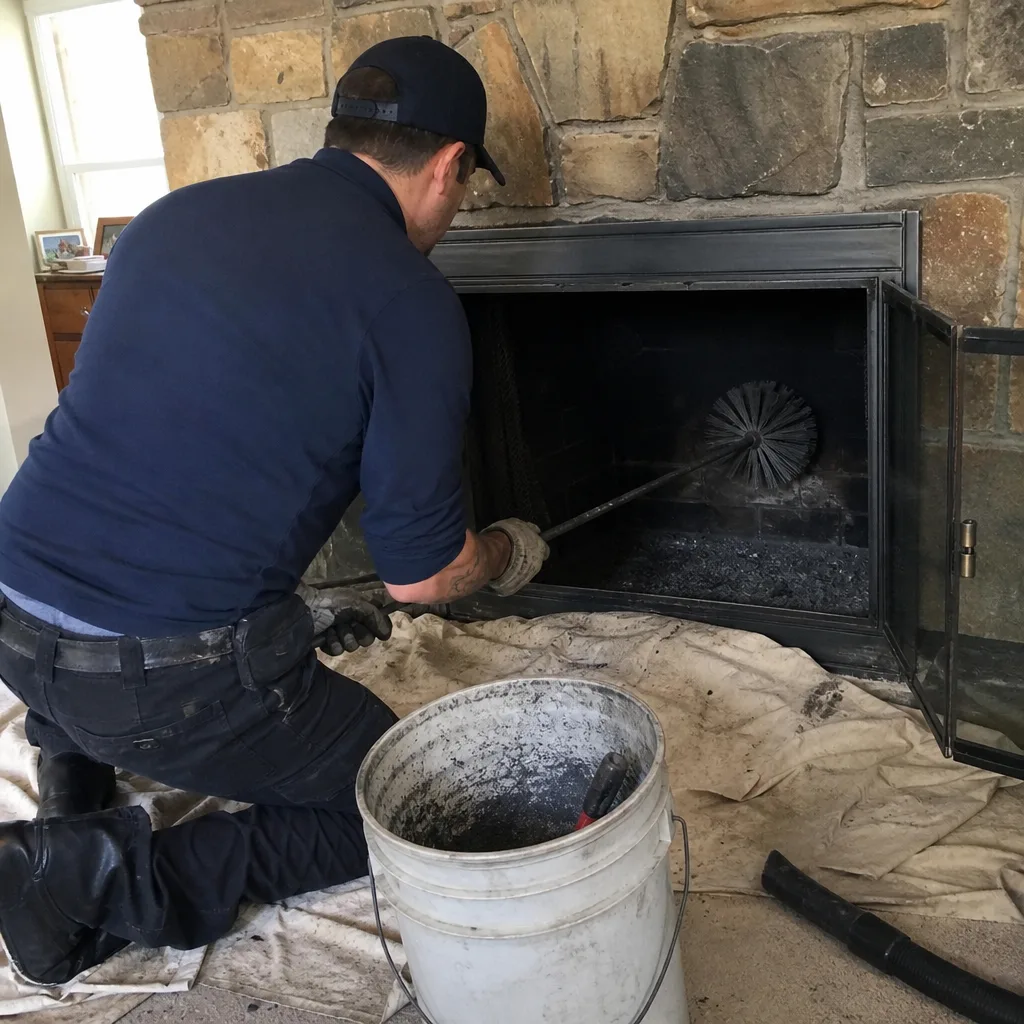
Not all warning signs require the same response. Here’s how to triage what you’re seeing, from lowest to highest urgency.
Monitor next season (low severity)
- Light, flaky creosote dusting visible in the firebox or at the damper. This is Stage 1. It’s not urgent, but it means the chimney is producing deposits and should be swept before the deposit deepens.
- Faint campfire smell that appears only during humid weather and dissapates quickly. This can indicate a small deposit or a damp flue. Worth monitoring, but schedule an annual sweep regardless.
- Minor efflorescence on one small area of brick with no rust streaks or visible cracking. Schedule a crown inspection next season, but don’t panic.
Schedule a sweep this month (moderate severity)
- Campfire smell in summer that’s consistent and noticeable. This is Stage 2 or 3 creosote off-gassing. The deposit is deep enough to warrant a professional chimney cleaning in Yonkers before the next burn.
- Dark staining above the firebox opening from smoke rollout. Indicates a draft problem that will only worsen.
- White efflorescence with visible cracking on the brick face or crown.
- Rust streaks below the cap indicating water entry at the crown.
- Musty odor indicating moisture intrusion or animal debris.
Stop using the fireplace today (severe)
- Sulfur or rotten-egg smell. Backdrafting combustion gases. Carbon monoxide risk. Stop using the appliance and call a professional.
- Acrid, sharp smell or visible smoke during a fire. Possible active smoldering in the flue. Extinguish the fire if safe to do so and call a sweep.
- Crumbling firebox mortar or spalled bricks exposing gaps in the firebox.
- A chimney fire that produced a loud roar, visible flames from the chimney top, or heavy smoke. Call 911 first, then call a sweep before using the fireplace again.
Yonkers Rowhouses and Two-Family Homes: Shared Flue Warning Signs
Yonkers has a large stock of rowhouses and two-family homes built before 1960, mostly in the neighborhoods around Getty Square, the Hollow, Park Hill, and Nodine Hill. These homes often share chimney structures between units. Two fireplaces on opposite sides of a party wall may vent into a single masonry chimney with divided flues, or worse, a single flue serving both fireboxes. Here’s what to watch for if you live in one of these homes.
- Draft failure that depends on your neighbor’s activity. If your fireplace draws fine in the morning but smokes into the room in the evening when the adjacent unit is likely running a furnace, the flue may be compromised or shared in a way that isn’t codes-compliant.
- Odors that aren’t from your fireplace. If you smell wood smoke when your fireplace hasn’t been used in months, the flue separation between units has failed, and smoke from the neighboring firebox is entering your living space.
- Animal noise in the wall cavity or scuttle, not the flue itself. If the flue liner has failed and vermin are entering through the masonry, they may be nesting between the flue and the framing of the shared wall.
- Water staining on the party wall at the ceiling line near the chimney chase. This indicates water entry at the shared chimney cap or crown, which is a common failure point on row house chimneys that haven’t been capped individually.
In these homes, a camera inspection of the flue is not a luxury. It’s the only way to see what’s inside the masonry without opening walls. We’ve found failed flue tiles, broken smoke chamber parging, and even open gaps between flues in Yonkers row houses that looked fine from the firebox.
What a Level 2 Camera Inspection Finds That a Flashlight Misses
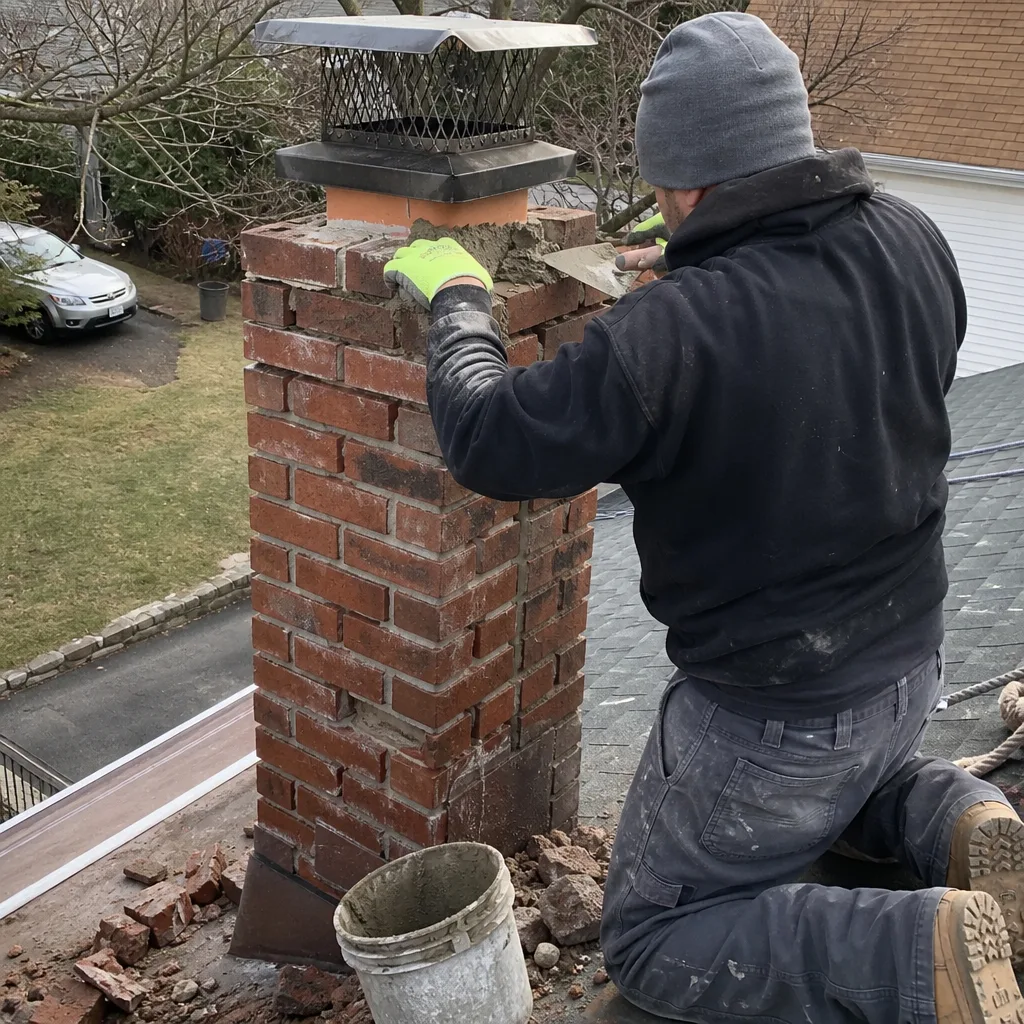
Most chimney sweeps still work the way sweeps worked in 1980: a flashlight, a mirror, and a brush. A flashlight shows the first three feet of the flue. It cannot show the middle of the flue where most chimney fires start, the condition of the clay tile liner’s inner surface, or a cracked liner that’s allowing heat to reach the masonry. A Level 2 camera inspection, per NFPA 211, requires a camera to be run down the entire flue length, including the smoke chamber and the firebox.
Here’s what the camera finds, in plain terms, and what it means:
- Failed clay tile liners with separated joints. The camera shows gaps between tiles. Those gaps allow heat and gases to reach the surrounding masonry. The fix is a new liner, usually stainless steel from DuraFlex or a ceramic system like HeatShield.
- Stage 3 creosote glaze stuck to the liner. The camera shows the glossy, tar-like deposit. This requires a rotary cleaning with specialized chains, not a standard brush sweep.
- Animal nests in the smoke chamber. The camera shows twigs, leaves, fur, and debris. We typically find squirrel and raccoon nests in Yonkers flues that lack a proper cap.
- Missing or cracked flue tiles mid-flue. The camera shows a section of the flue that has lost its liner. This is a chimney fire waiting to happen.
- Improperly sized flue for the appliance. The camera documents the flue dimensions. If the flue is too large or too small for the firebox or appliance, draft failure is chronic. The corrective fix is an appropriately sized liner from a manufacturer like Famco or Olympia Chimney, not a bigger damper.
We began requiring a camera scan on every single inspection in 2009, years before it became standard practice or was written into the Haven Standard as Clause 4. The reason is simple: you cannot make a written recommendation about a flue without seeing the entire flue. Anything less is a guess, and a written price for repair work based on a guess is not a price at all. Level Two Chimney Yonkers has documented over 38,000 inspections and cleanings since 2009 with a camera record on every single one.
Common Mistakes to Avoid
- Assuming a campfire smell in summer is “normal for a chimney.” It isn’t. A properly swept flue has no odor. That smell is creosote off-gassing, and it means the flue needs attention before the next fire.
- Burning a “creosote sweeping log” and calling it good. These products can loosen some Stage 1 creosote, but they don’t remove the deposit, and they can’t address Stage 2 or 3 at all. They also produce heat that can accelerate a chimney fire in a dirty flue. There is no substitute for a mechanical sweep.
- Ignoring rust streaks because “it’s just cosmetic.” Rust streaks below the cap are a water entry marker. The water that caused the rust is still entering the chimney, and in Yonkers freeze-thaw cycles, that water is doing structural damage every winter.
- Assuming a newer home doesn’t need a chimney inspection. Homes built or renovated since 2015 are tighter, which changes draft behavior and can create negative pressure that a 1960s-era chimney was never designed to handle. New doesn’t mean clean.
- Ignoring draft failure and opening a window instead. Yes, opening a window can relieve negative pressure and restore draft temporarily. But it doesn’t tell you why the pressure imbalance exists, and it masks liner obstructions that will worsen. Address the cause, not the symptom.
- Using a rowhouse chimney without knowing what’s on the other side. In shared-wall homes, a draft problem or odor may originate in the neighboring unit. Without a camera inspection, you’re guessing about a shared system.
- Waiting until burning season to schedule a sweep. Every Yonkers sweep’s calendar fills in September and October. Schedule in spring or summer, and you’ll be burning in November while everyone else is still waiting for an appointment.
When to Call a Professional
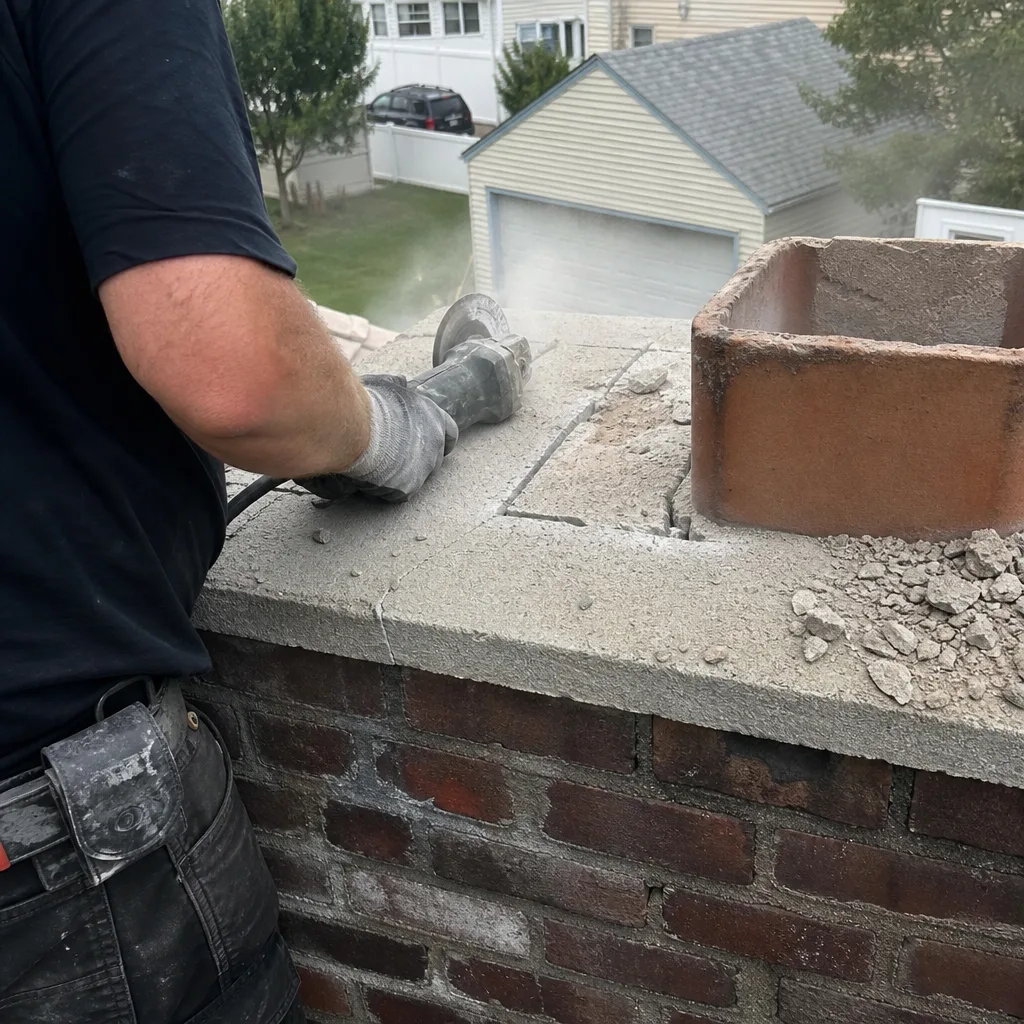
Call a chimney professional when you notice any persistent odor from the fireplace when it’s not in use, when smoke rolls back into the room, when you see dark staining above the firebox opening, when the brick face shows white efflorescence or rust streaks, or when you hear animal activity in the flue. Also call after any chimney fire, no matter how minor. If you’re a Yonkers homeowner who’s been told your chimney needs thousands of dollars of liner or masonry work and you want a second set of eyes, that’s a call worth making too. Level Two Chimney Yonkers offers free estimates in Yonkers and a free second opinion on any written competitor’s estimate. Call (551) 212-3526 to schedule.
Frequently Asked Questions
A standard chimney cleaning and sweep in Yonkers typically runs between $189 and $325 depending on the flue condition, the deposit level, and any accessibility complications like a steep roof pitch or a tall ladder run. Stage 3 creosote removal costs more because it requires rotary cleaning. Our written price includes the sweep, the Level 2 camera inspection, and a documented photo report before any work starts. Call (551) 212-3526 for a written price on your chimney.
The NFPA 211 standard, which Level Two works to, recommends an annual inspection and sweeping when creosote build-up reaches 1/8 inch. If you burn more than 30 fires a season, use softwood like pine, or burn unseasoned wood, you may need a sweep at the midpoint of the season. Most Yonkers homeowners who burn regularly should plan for one sweep per year, ideally before October.
You need a new liner if the camera record shows a failed tile, separated joints, or a liner that’s no longer continuous. If a sweep recommends a new liner without showing you camera evidence of the damage, get a second opinion. We give every customer the camera footage from their inspection, not a verbal summary. You should be able to see exactly what we saw.
Creosote accumulates with each fire. At Stage 2, the deposit is deep enough to restrict draft and off-gas at room temperature. At Stage 3, the deposit is a combustible glaze that can ignite from a hot fire, spark, or even a backdraft. A creosote fire can exceed 2,000 degrees, crack flue tiles, and escape the flue to reach framing. Skipping a cleaning turns an $189 hour of work into a $3,000-$8,000 repair. The annual sweep is the cheapest insurance on the house.
You can read the exterior signs described in this guide from ground level and the firebox opening, but you cannot see the middle of the flue where most problems begin. A camera inspection is the only way to document the flue’s condition end to end. If you’re handy, you can clear visible debris from the firebox, but leave the flue inspection to a trained professional with a camera.
You should get a written price before any work starts, a written scope of work, a documented photo record of the flue after cleaning, and a written warranty. If a sweeper won’t put the price in writing before arriving, or won’t show you the camera footage, find another sweeper. Every Level Two job includes a written price, a photo record, and the 365-Day Done Right Promise under the Haven Standard. Call (551) 212-3526 to schedule.
The Bottom Line
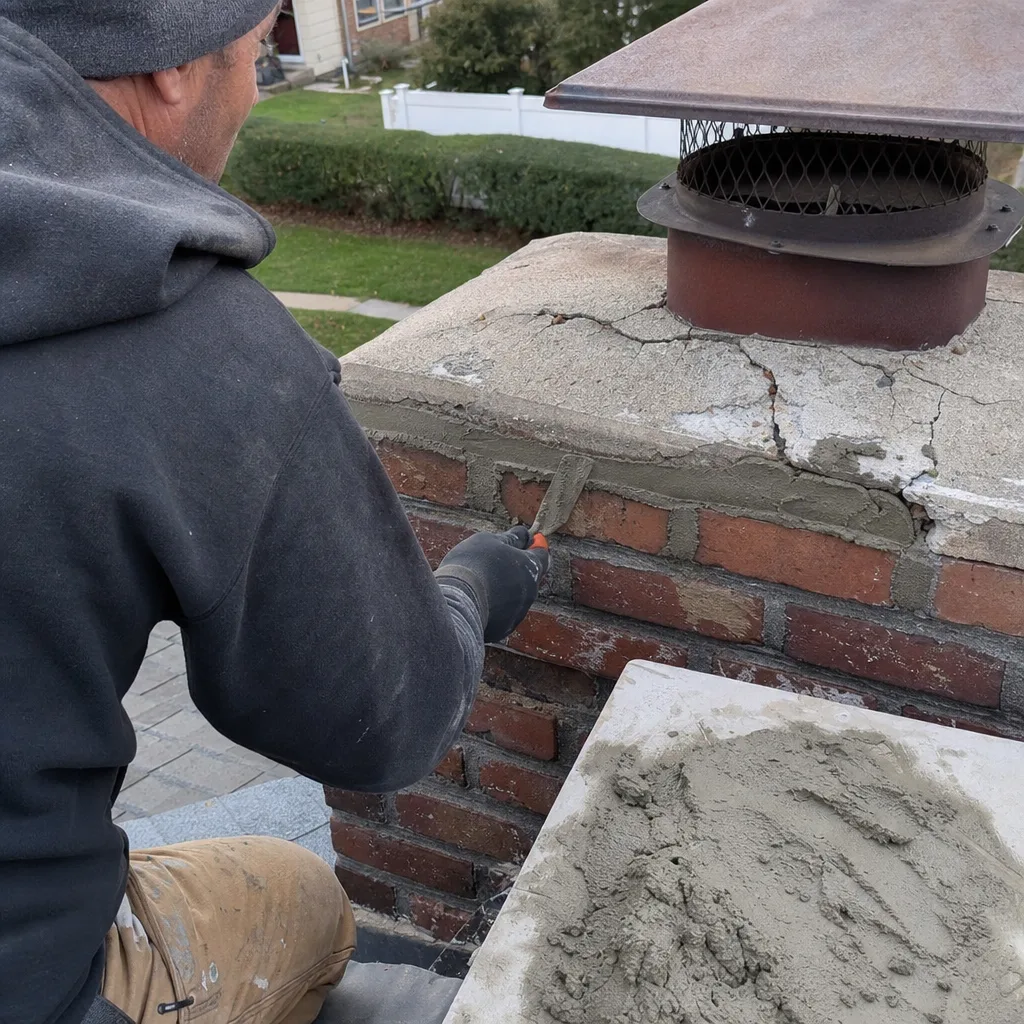
Chimney problems in Yonkers announce themselves through smells, stains, and draft changes long before they become structural failures or fires. The cost of paying attention is an annual sweep and inspection, priced between $189 and $325 in this market. The cost of ignoring the warning signs is liner replacement, firebox rebuild, or worse. If your chimney smells in summer, smokes into the room, or shows rust streaks below the cap, don’t keep an eye on it. Get a camera in it. Level Two Chimney Yonkers has inspected and cleaned over 38,000 chimneys since 2009, every one with a written price before work started and a documented photo record when it was done. Browse more guides & resources on keeping your chimney safe. Call (551) 212-3526 for a free estimate, or to get a second opinion on a written quote you already have.
Written by Corrine Halstead, Owner at Level Two Chimney Yonkers, serving Yonkers since 2009.